


Upskilling Generation Net-Zero (GenNZ) Project Progress Summary
Sun 1st September 2024 - Tue 30th September 2025
March 2024, Erasmus+ Call 2024 Round 1., ESA Crete (Jackson A&S O.E.) submitted a Grant Application as Project Leader. ESA invited Slovenian NGO, the Entrepreneurship Movement Club (EMC) to be a project partner because of their long term experience in skills training, coaching and their extensive network across Slovenia.
We applied for a grant under the ‘Action Type’, KA210- VET Small-Scale partnerships in vocational education and training. We were DELIGHTED to be successful in our application and awarded €30,000 for a 13 months project, starting from 01.09.2024.
We were even more delighted to see that the grant application, quality and evaluation process, awarded ESA the 2nd highest score (90/100) in all applications from Greece for that funding round.

ΑΠΟΦΑΣΗ-ΧΡΗΜΑΤΟΔΟΤΗΣΗΣ-ERASMUS-2024-ROUND-1-ΚΑ210-VET.pdf (iky.gr)
We aim to continue to deliver the highest quality activities and outputs throughout the project until the final reporting stage.
Here, you can follow our project progress (scroll down for Activity details) and see how we are using EU funding to develop a robust framework for meeting our GenNZ project objectives to:
‘… develop a complete, ready to use, ‘green skills’ vocational competencies (knowledge, skills and behaviours) framework and teaching programme, with assessment and micro-credentials, which is grounded in workplace reality.’
‘With the potential to address the gap between Vocational Education Training (VET) green skills development and the fast-changing world of work towards net-zero’.
YOU CAN JOIN US as a contributor to our studies and take a Quick Survey (5 mins), or as a participant of the GenNZ Summer School, or attend our end of project celebration Athens and Crete) in September, or become a member of the GenNZ community on LinkedIn and make your contribution to progressing workplace, ‘Green Skills’ in the European Tourism, hotel and hospitality sectors.
The GenNZ Story
The beginning …Pre-GenNZ Erasmus+ project start date
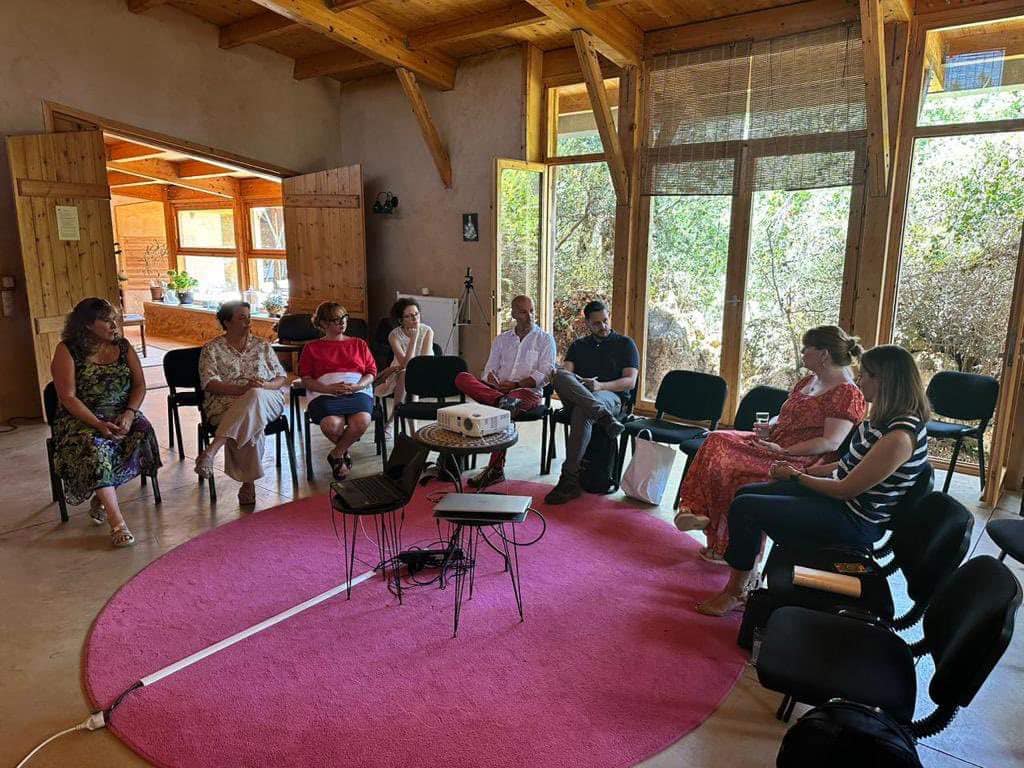 The British Embassy and Consulate at ESA
While we were waiting, in hope, that our GenNZ application had been successful we had started to explore the situation about Green Skills in the Tourism sector in Greece through a rigorous academic study.
This exploration was driven by a request from the British Embassy, Athens to convene a round-table discussion at ESA in May 2023 to explore the future of Sustainable Tourism in Greece, in relation to the Greek Government strategy. Skills development was a focus of the discussion, which was continued with the British Council | Greece
Later in 2023, ESA undertook a study about training ‘Management Green Skills’ with The Chartered Management Institute (CMI) in London which has contributed to the GenNZ project.
 Sharon Jackson presenting at the CST Conference
May 2024, we presented the findings of that first study at the Cultural Sustainable Tourism (CST) conference, hosted by the University of Maia, Portugal.
The full paper from this study ‘Cultural Sustainability Tourism Knowledge and Skills: Lessons from the Amazon to the Mediterranean' was published, open source in January 2025.
This study has been a foundation of the Activity ‘A1’ of the GenNZ project.

The ‘GenNZ’ Project ‘Kick-Off’… Chania, Crete, Greece.
13- 15 September 2024
Slovenian partner, EMC President, Andrej Korpar joined us at ESA in Crete for the official ‘GenNZ’ kick-off meeting.


Sharon Jackson from ESA Crete with Andrej Korpar from EMC Slovenia, in Chania 15.09.24 planning GenNZ activities
For both cost reduction and environmental impact reduction, we combined the GenNZ project kick-off with the scheduled ‘Sustainability Activators’ (SA) skills development workshop at ESA. This enabled us to get early stakeholder engagement and dissemination opportunities for GenNZ.
The SA event was adapted (see agenda) to include a Sustainable Tourism roundtable discussion on Friday 13th September, at ESA. The main findings from ESA’s recent research paper on the need for strategic Green Skills teaching in tourism were presented with an introduction to Erasmus+ Upskilling Generation Net Zero (GenNZ) project.
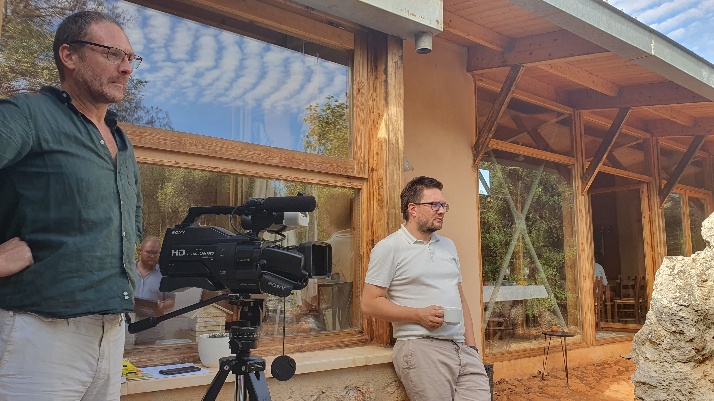 Andrej Korpar from EMC Slovenia, at ESA Crete, watching the filming at the end of sustainability KSB training presentations

GenNZ Project Activity 1. Research and scoping study.
A survey to identify the status quo and skills matching (September – October 2024).
GenNZ Activity 1.started with an academic literature review, a review of practitioner publications and other EU funded projects. The focus of the review was the status of ‘green skills’ in management and employment in Slovenia and Greece, in respect to a transition towards a Sustainable Tourism business model and wider Net-Zero transition.
Management Education for a Net-Zero world
Most notable data came from building on findings from the pre-project ‘Cultural Sustainable Tourism’ study, from The Greek Tourism Confederation SETE research on sustainable tourism in Greece and from the Slovenia Tourism board Slovenia Green initiatives.
A main insight from the scoping study was that in both countries there is little or no education for ‘green management skills’ development, or ‘green employability’ competencies provided for the tourism and hospitality sector Where training is given, it is underpinned by a ‘historic’ tourism model of ‘customer service’ without horizon- scanning towards what tourism sector businesses and supply chains will look like in a Net- Zero world, and what competencies will be necessary.
Micro - Credentials
An emerging theme from both academic and practitioner literature was the rise of Micro-Credentials (MC) in Vocational Education Training (VET). Two Erasmus+ projects with a focus on MC emerged, MIC4VET explored a common strategy for the recognition and validation of transversal/soft skills through micro-credentials and TOURing which applied a MC assessment model to their tourism focussed skills development project.
GenNZ Project Partners also attended online learning webinars about the application of MC in VET Work Place Learning (WBL) delivered by the European Commission Pact For Skills and European Alliance for Apprenticeships
 Sharon Jackson presenting at Tallinn University 20.02.25
A GenNZ project contribution towards gaining more understanding about MC in relation to the tourism and hospitality sectors, has been an abstract, co-written by the Project Partners, ‘An exploration of the role of micro-credentials in workplace learning, ‘green management skills’ development in the tourism sector: 2 comparatives case studies from Greece and Slovenia’
The abstract was accepted for presentation at the ‘Symposium on Micro- Credentials and Sustainable Development’, hosted at Tallinn University, Estonia 20- 21, February 2025, with potential for full publication later in 2025.
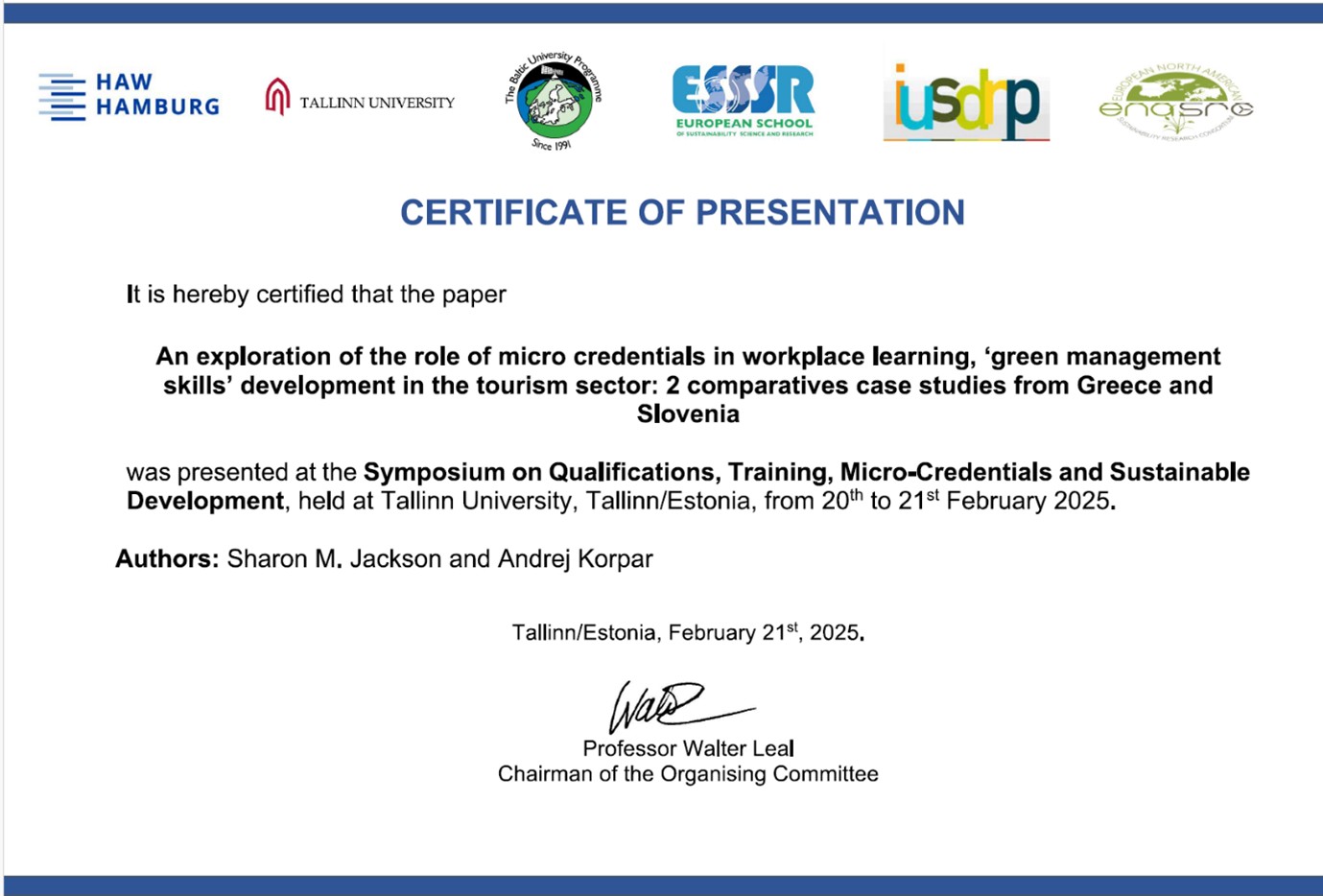


GenNZ Project Partners Sharon Jackson (ESA) and Andrej Korpar (EMC) at Tallinn University
Survey
To test what the data from the desk research and scoping study suggested, the project partners created a survey of questions, in English, Greek and Slovenian which explored the current level of knowledge, skills and behaviours (KSBs) of people working in the tourism and hospitality sectors of Greece and Slovenia. Also, their impressions of education in the tourism sector. NB: all 3 surveys will remain open until 30.09.25.
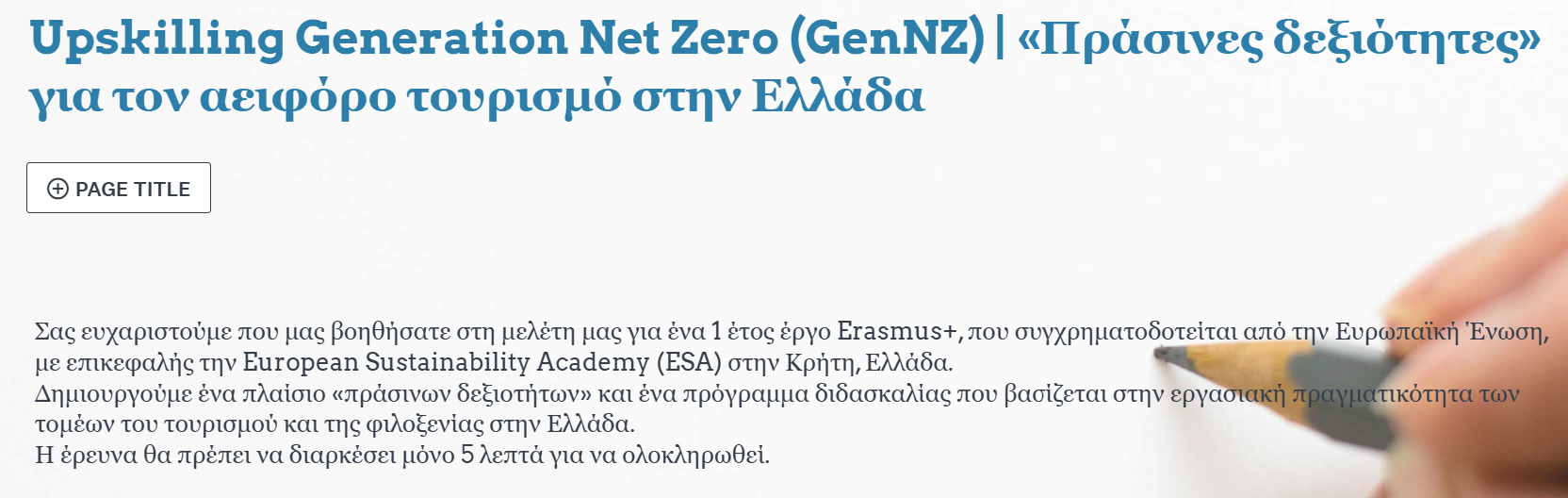
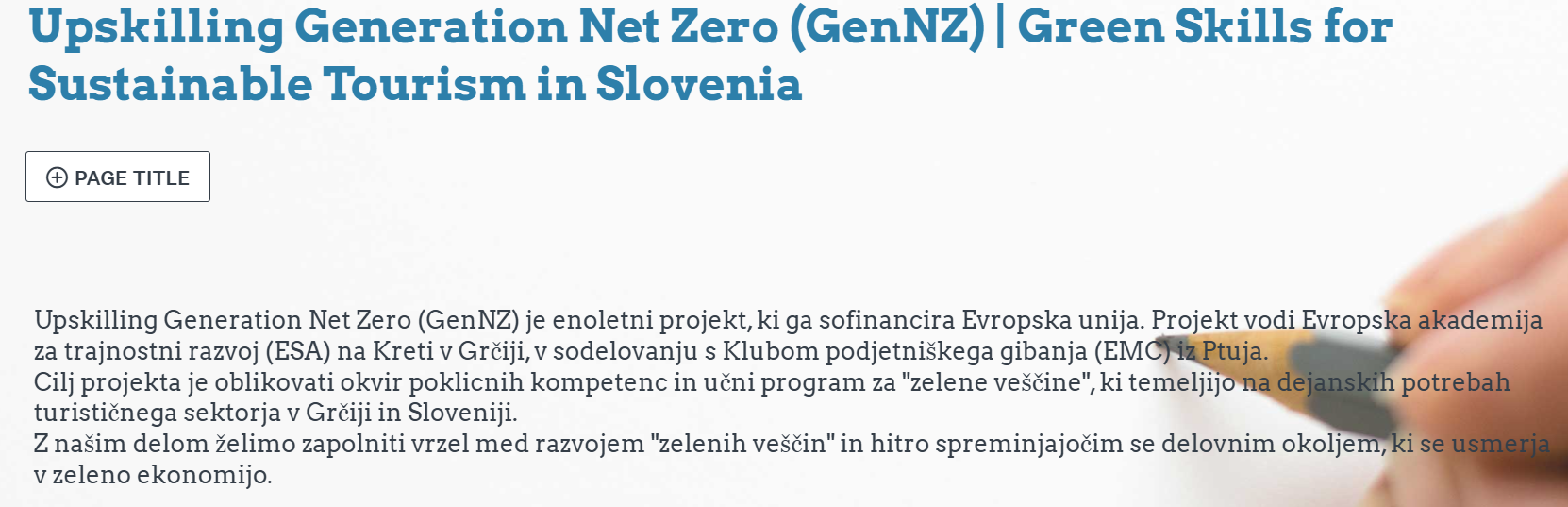
The full study, complete findings and analysis of survey responses will be available, open source, in English, Greek and Slovenian at the end of the GenNZ project.
Data from the scoping research combined with the survey responses informed the design of Focus Group explorations in Greece and Slovenia for Activity 2.
GenNZ Project Activity 2. Green Skills Focus Groups
Insights from experts and practitioners to inform the pilot, ‘Summer School’ programme, design (November – December 2024).
GenNZ Activity 2. was designed to probe and more deeply explore the first findings and themes about green management skills in sustainable tourism in Greece and Slovenia. The 2 main areas for deeper exploration, through expert and practitioner focus groups were:
- Current levels of knowledge and skills about the ‘green transition towards a Net – Zero economy’
- What training is required?
To address these 2 areas, we designed structured, facilitated focus groups for 10 people in Greece and 10 in Slovenia, with open questions for understanding more about:
- ‘Green skills’ training gaps
- Required training content
- Preferred training delivery methods.
Focus Group Attendees
Focus contributors were identified from target groups:
- VET Educators
- Tourism and hospitality sector: Employers, Educators and HR professionals
Subject matter practitioners were invited from across the tourism and hospitality sector. A diverse range of contributors were invited to ensure inclusivity and a realistic representation of the contribution to the study.
Although Higher Education Institutions (HEI) were not the focus of this intervention, a HEI contributor with experience in the tourism and hospitality sector did contribute some valuable input in the context of training.
 Andrej Korpar conducted focus groups in Ptuj Slovenia

To gather robust findings, additional data was gathered from 1:1, semi structured interviews and from informal discussions at diverse gatherings.
Findings
An interim analysis was conducted at the end of January 2025 and presented at a conference about Micro-Credentials, at Tallinn University in February 2025.
Notably, the number of survey responses from Slovenia were lower than from Greece. The partners agreed plans to boost survey responses. Data collection remains ongoing throughout the GenNZ project.
Figure 1. illustrates early observations from the survey and focus group data collection activities. These observations are aligned with the A1. desk research and scoping study and can be used to inform the design of modules for a ‘green skills’ in tourism/ hospitality training programme (A3).
 Figure 1. Interim results February 2025
Key quotes from focus group contributors include:
“We say we are doing it (sustainable tourism) but we are not really.” (Hotel Owner GR)
“Most people in hospitality/ tourism sector have no management or business training’’. (Tourism Educator GR)
“Internal stakeholders don’t yet realise the skills gap is there”. (Small Hotel Owner GR)
“Many managers in tourism don’t know how to include sustainability in their daily work. They want simple tools and tips to help them get started.” (Tour Manager SL)
“… many don’t know how to explain their green efforts in a way that customers will understand and value”. (Hotel Owner SL)
“…designing micro-credentials tailored to specific tourism sustainability needs, such as green marketing, lifecycle management of equipment, or customer engagement”. (Tourism Educator SL)
Green Skills training
Through triangulation of findings from desk research, survey, focus group data collections and knowledge sharing with partners in other EU funded projects, the following shortlist of gaps in knowledge, skills and behaviour (KSB) emerged for both participating countries.

NOTE: Respondents from neither country explicitly mentioned business competencies for managing change or themes about organisation values and culture, personal values or AI.
Preferred methods of learning
As previously mentioned, at this stage of the project, the level of survey responses from Slovenia were too low to draw any meaningful conclusions. Figure 2. Illustrates an interim analysis which will be updated when more data has been collected.
The top 3 preferred learning methods of:
- Sustainability added to all usual workplace training
- Case studies and stories
- Workplace decision making check lists -Risks and opportunities for my specific role.
correlate with the data collected in the pre-project studies and the 2023 Chartered Management Institute survey of 1300 responses.
These methods will be applied during the design stage (A3).
The option of ‘A formal, general overview, training programme with credentials’ was intended to identify preferences between HEI and informal learning. However, this intention may have been lost in translation. This is to be explored further during the Activity 4. Pilot Summer School.
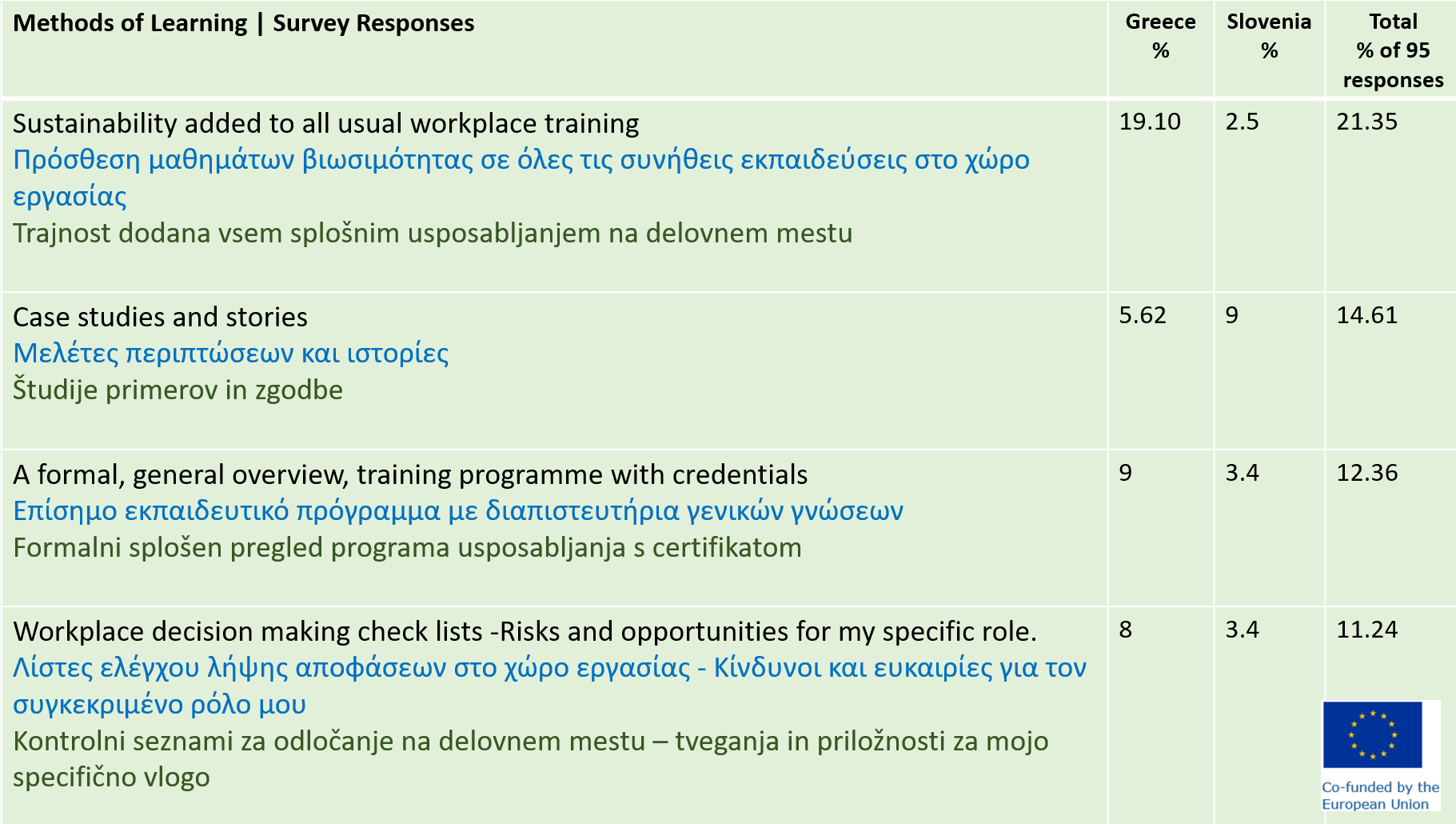 Figure 2. Preferred methods of learning, from survey responses up to January 2025
Building networks and information gathering
Throughout the project, the GenNZ Project Partners have attended live networking events in Greece and Slovenia, as well as attending online training and networking webinars organised by the European Commission Pact For Skills and European Alliance for Apprenticeships (EafA).
October 2024, Sharon Jackson (ESA) attended the Global Sustain Forum (ESG reporting) in Athens. At the event, the Greek Tourism Confederation (SETE), Executive Director Alexandros Thanos presented the new SETE Metron ESG reporting platform. This initiative followed an INSETE study in 2023 into the readiness for the Greek tourism sector towards the Greek Government strategic plans for a National ‘sustainable tourism business model’. Study findings included:
‘a mismatch between espoused sustainability intentions and workplace reality, with limited or absent plans, measurements or training’
‘60% of respondents (hotels) do not measure their sustainability impact, because they do not know how to’
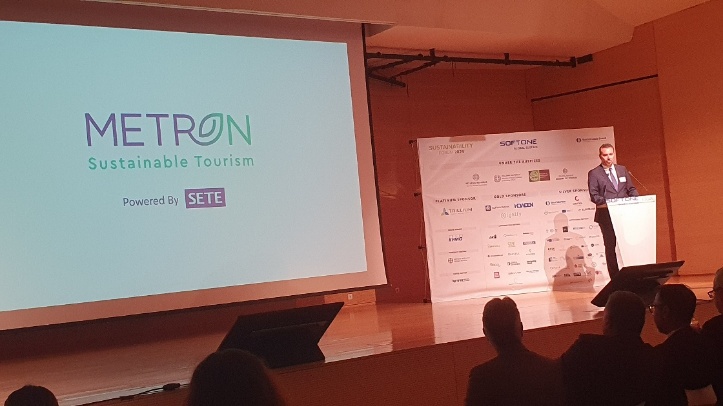
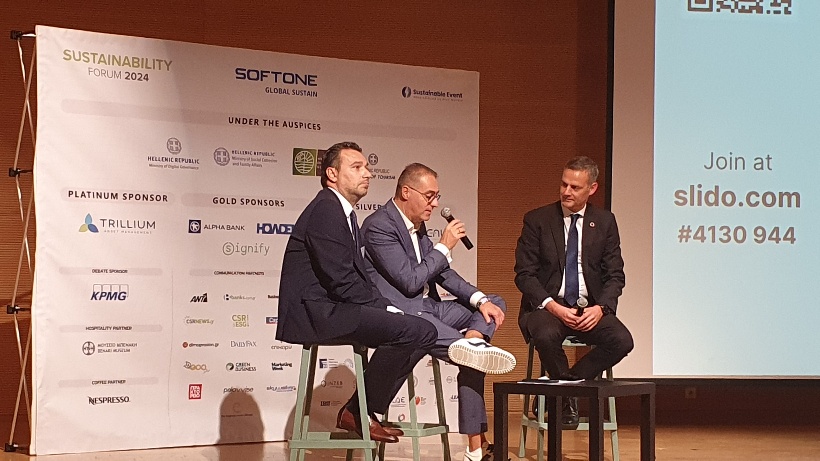
SETE Executive Director discusses ESG reporting for the Greek tourism sector
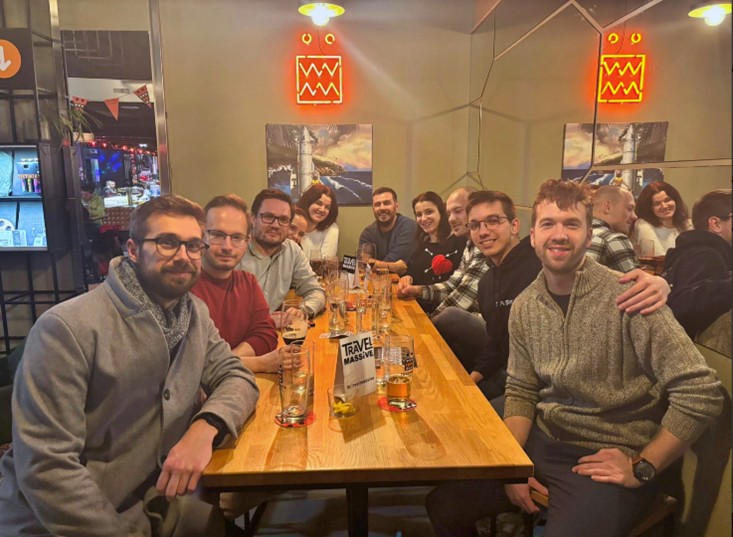
December 2024, Andrej Korpar (EMC) attended the Travel Massive Slovenia Chapter Christmas gathering in Ljubljana.
He explained about the GenNZ project objectives and gained interest and support from project target group, Travel Massive members.
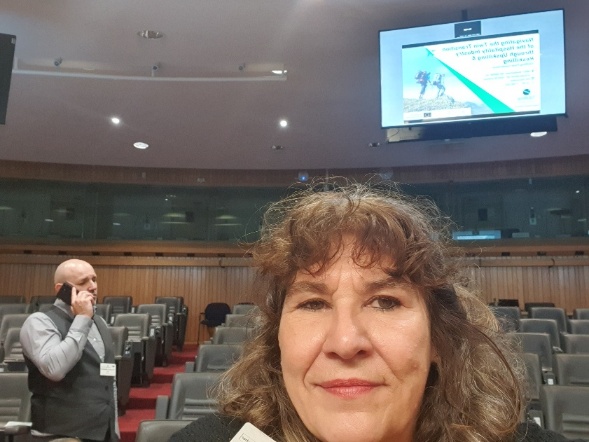
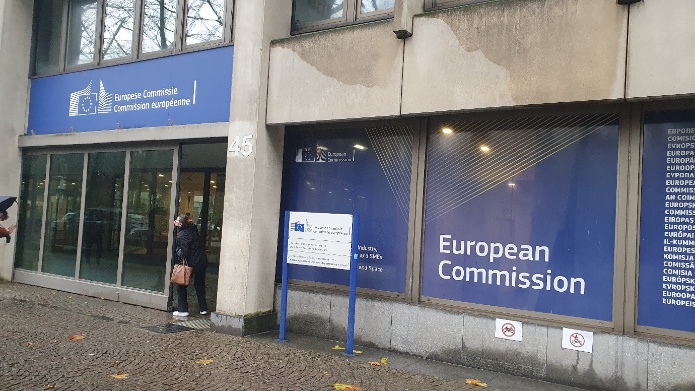
December 2024, Sharon Jackson (ESA) was invited to attend the Erasmus+ TOURing project closing event at DG Grow, at the European Commission in Brussels.
The event was an opportunity to share project objectives and outcomes with a view to collaboration and to avoid duplication of EU co-funded project work.
The TOURing Green Skills self-check will feature in the GenNZ Pilot Summer School.
 Mr. Klaus Ehrlich
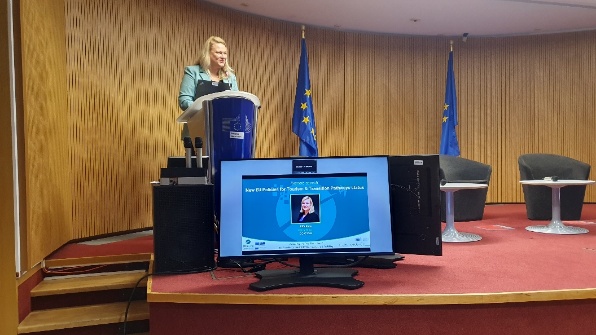 Ms. Elfa Kere
Sharon had constructive conversations with Ms. Elfa Kere, Policy Officer Tourism, Directorate-General for Internal Market, Industry, Entrepreneurship and SMEs, and Mr. Klaus Ehrlich, Pact for Skills in Tourism Large Scale Partnership (PacTS4ALL) Co-ordinator.
Other meetings and discussions with the TOURing project team from AKMI in Greece and with representatives from The European Association of Institutes for Vocational Training (EVBB), The European Vocational Training Association (EVTA) and The European Forum of Technical and Vocational Education and Training (EfVET) focussed around the essential need for increased collaboration and partnerships for enhancing the quality of VET across Europe.
Outputs from GenNZ A2. include:
- An analysis of green skills (knowledge, skills and behaviours) for specific roles in the tourism and hospitality sector from EU, regional, national and transnational perspectives.
- Identification of preferred green skills learning methods.
- Identification of practical workplace relevance.
- Workplace learning (WBL) access agreements in place for Activity 4.
- Insight for a relevant and useful contingency ‘assignment’ assessment where WBL access may not be possible due to the learners’ locations.
- GenNZ project community and network increase in numbers in both partner countries and across social media platforms.
The interim findings from Activities 1. and 2. provided sufficient insight for project Activity 3. designing ‘green skills’ workplace learning training module for testing in a Pilot Summer School during May – June 2025.
Data about the outcomes and evaluation from the Summer School Pilot will be added to the study.
A full report on the study, with an analysis of the findings and practical recommendations will be available, open source at the end of the GenNZ project.
GenNZ Project Activity 3. Design teaching materials
Training module design with workplace learning and evidence based assessment (January – March 2025).
GenNZ Activity 3. started with a robust analysis of the feedback collected from tourism practitioners and identified target groups from Greece and Slovenia, through surveys and focus groups conducted between October 2024 and March 2025 (Activities 1 and 2).
The programme design and assessment are fully aligned with the importance of practical workplace issues arising through the GenNZ survey and focus group findings, and cross referenced with other recent green management skills studies.
The design stage was finalised with feedback and insight from subject experts. During March and April 2025, feedback about the GenNZ teaching content and design was gathered from hotel and restaurant owners/ managers, tour company owners, and ESG in tourism practitioners.
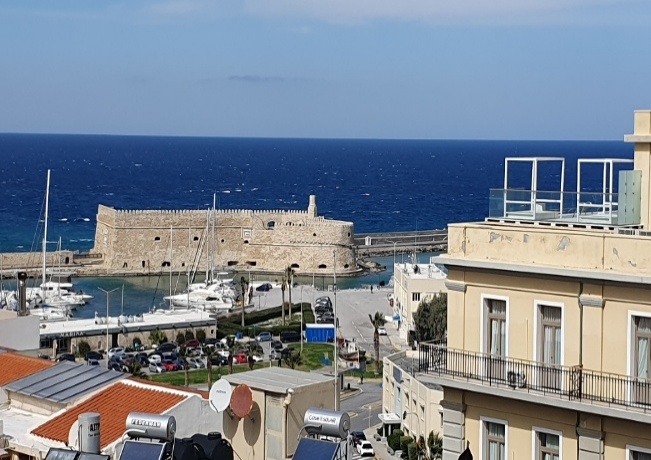
In Heraklion Crete, the ‘Energy in Buildings’, 2025 conference hosted by the Hellenic Chapter of ASHRAE convened a wide audience from the Hotel sector of Greece.
GenNZ Greek partner, Sharon Jackson was invited as a guest speaker about sustainability in the hotel sector and to introduce the GenNZ Summer School to the audience.
 Sharon Jackson speaking at ASHRAE conference March 2025

Feedback from the attendees was very positive and several were so enthusiastic they signed- up to reserve their place on the GenNZ Summer School before the applications promotion campaign had started!
Feedback confirmed the importance of workplace, location related, ‘green skills’ training in the HoReCa sector. The most consistent issue raised was the importance of appropriate communication about sustainable tourism that makes sense to both businesses and customers.
Concerns were raised about the February 2025 announcement of The EU Omnibus Regulation, legislative package, and the impact on the EU Green Deal, Green Transition and ESG compliance.
It was generally agreed that the impact of recent changes in the ‘world order’ on trade and uncertainty has raised the level of importance of the GenNZ project to upskill and strengthen KSBs for future-proofing and resilience in the tourism, travel and hospitality sectors.

In Ljubljana, GenNZ Slovenian partner Andrej Korpar from EMC presented the Summer School programme to the Travel Massive Slovenia Chapter with Chapter leader Rudi Medved and Travel Massive Founder Ian Cummings
The members gave their feedback and advice about the GenNZ programme design.
Travel Massive is a global network of 80,000 travel professionals across 150 cities.

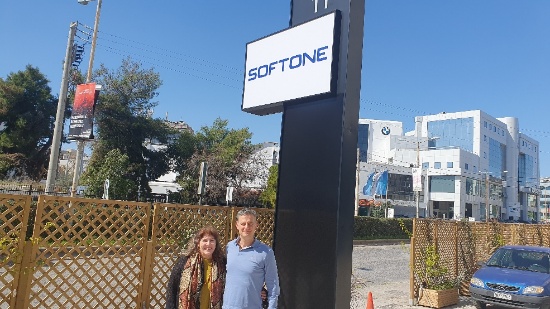
In Athens, with ESG expert Michael Spanos Managing Director from Softone Global Sustain Sharon discussed the need for training in ESG understanding in the Greek tourism sector and ‘step by step’ skills. Feedback suggested including the future of ESG in strategic, green transition planning, in the GenNZ Summer School training modules.
Quality and Evaluation
Through understanding more about the role of micro-credentials (MC) in VET informal education, lifelong learning and Continuing Professional Development (CPD), it has become very clear that the issues of consistency of quality and confidence in MC and digital certification are grounded in ensuring robust, transparent assessment and evaluation methodology.
The GenNZ learning framework has been designed with a rigorous assessment process of achieving learning objectives and impact. However, the partners expect the A4 pilot Summer School evaluation and feedback process to bring new insight into greater quality assessment processes for scaling the programme.
Evaluation and assessment processes have been designed-in at different stages of the programme for measuring progression.
Outputs from GenNZ A3. include:
A first draft of a ready to use, ‘green skills’ vocational competencies (knowledge, skills and behaviours - KSB) framework and a short, example teaching programme, with assessment which has potential for micro-credential certification, which is grounded in workplace reality.
Ready for testing through a Pilot ‘Summer School’ online, on-demand 8 week programme of 28 Continuing Professional Development (CPD) learning hours (3.5 per week).
VET learning elements designed include:
- 4 stand-alone, mandatory, on-demand, training modules (pick and mix potential) for teaching the 16 specific KSBs asked for through survey, focus groups, plus 8 essential transversal skills which emerged through researching academic studies in green skills development in the tourism and hospitality sectors.
- 6 subject matter expert guest speakers and case studies from net- zero practitioners in both Greece and Slovenia, delivered as optional, LIVE INTERACTIVE webinar sessions which are related to the 4 modules. This adds regional context and creates an engaged, learning community.
- 2 ‘bonus’ pre-recorded teaching videos, by industry experts and educators about ‘the net-zero future of tourism’, including the role of AI .
- Easy to use and ease of access, password protected web areas for downloading teaching materials, access to resources and webinars, and for uploading completed assignments for assessment. Alternative methods are offered to ensure ease of access for all. The pilot programmes are taught in Greek and Slovenian, in line with the grant agreement, with an English version available for all learners if required.
- 1 Workplace Learning (WBL) assignment, with an alternative ‘project’ for assessment where WBL access may not be possible due to the learners’ locations.
- Built in personal reflection and1:1 tutor support
- Module descriptor for aligning teacher and learner guidance, including delivery formats, assessment and feedback with assessment weighting.
- Marking rubric for consistent and transparent assessment
The GenNZ first draft programme is ready to be piloted through the GenNZ Summer School for 20 participants in Greece and 20 in Slovenia between May – June 2025!
GenNZ Project Activity 4. Training Pilot
The GenNZ Summer School activity took place between May and June 2025, to pilot and ‘test’ the training materials which were designed and based on survey and scoping study input from tourism and hospitality employees from Greece and Slovenia in Activities 1 and 2.
Full details of the GenNZ Summer School can be found here in Greek or here in English and here in Slovenian
GenNZ Activity 4. Recruitment of participants started in April 2025 through social media calls and the GenNZ LinkedIn group, with a short introductory video to give an overview of the programme.
Short video introduction:
Applications received, reflected the 4 project impact target groups of:
- Youth (18-30) | newly graduated, unemployed, existing employee, entrepreneur
- Mid-career (30 plus)| unemployed, existing employee, entrepreneur
- Mid-career change with desire for enhancing and futureproofing workplace competencies
- VET Educators
And also from 2 of the other ‘welcomed’ groups:
- Small artisan businesses, micro & SMEs
- Selected NGOs & Environmental Organizations
Each application to participate in the GenNZ Summer School was checked for eligibility.
20 participants from Greece and 20 from Slovenia were accepted and signed up for the 7th May, online, Summer School induction session .

Demographics
There was an even spread of male and female applicants, with a diverse mix of applicants from islands, mainland, seaside and mountain regions, city and rural locations from both Greece and Slovenia.
The ages of successful applicants were diverse, ranging from 20 -60.
There was a noticeably higher number of young female participants from Slovenia than Greece.
Participants were introduced to the purpose built, password protected GenNZ online Virtual Learning Environment (VLE) for downloading their assignments and teaching support materials. They were also give a personal, private, GoogleDrive area for uploading their assignments for assessments.
NOTE: For access to the password protected VLE, in English, Greek or Slovenian, to do the course independently, CONTACT US.
Learning Modules
Over 8 weeks, simultaneously, the GenNZ Summer School participants in Grece and Slovenia undertook 4, structured, learning modules:
- Back-Casting and Horizon Scanning – Module 1.
- Understanding Waste Reduction and LCA Measurement– Module 2.
- Developing Green Products and Services – Module 3.
- Sustainability Communication(s) – Module 4.
For each module, a subject matter expert speaker delivered a 60 minute, interactive webinar to enhance learning for each module.

2 extra, pre-recorded educational videos were available on demand for participants in both countries.
These videos are recorded in English with Greek and Slovenian subtitle options
Dr. Rosa Vasquez Espinoza | Sustainability Communication:
Rudi Medved Making Sustainable Options Visible | AI in Tourism:
Workplace Learning (WBL)
The WBL element of the course was designed to ensure practical skills in the application of new knowledge learnt. Each participant presented their WBL project in a live, online 6 minute ‘pitch’ to their peers and tutors. The short presentation was assessed for the clarity of communicating the most important points and for the practical sustainability impact of their project. The marks were carried forward to their total assessment and award.

Final assignment
A final written assignment has been structured to bring together all of the learning elements and self-reflection on newly learned knowledge skills and behaviours. Throughout the programme, rigorous and transparent marking is conducted by at least 2 markers, with regular comparison of marking between Greece and Slovenia to ensure consistency.
Quality and Evaluation
Evaluation and assessment processes were designed-in at different stages of the programme for measuring progression. This includes built in personal reflection and1:1 tutor support where required.
Outputs from GenNZ A4. include:
- A Piloted ready to use, ‘green skills’ vocational competencies (knowledge, skills and behaviours - KSB) framework and a short, informal teaching programme, with assessment which has potential for micro-credential certification, which is grounded in workplace reality.
- Tested Marking rubric for consistent and transparent assessment.
- Ongoing evaluation and adjustments reporting for good practice and continuous improvement.
All details of the GenNZ Summer School results and outputs can be found on the Erasmus Plus Results platform. Search for 2024-1-EL01-KA210-VET-000257154 Upskilling Generation Net-Zero DIRECT LINK TO FOLLOW
GenNZ Project Activity 5. Post Pilot Programme Results Webinar
On Tuesday 16th September, 2025, GenNZ project partners, tutors, participants and guests from Greece and Slovenia gathered by webinar to share their experiences and results from the 8 weeks GenNZ Summer School.
It was agreed to host a combined Greece and Slovenia webinar as participants had expressed their desire to share their learning experiences between the 2 countries.

GenNZ Summer School Progression
Retention of participants studying through online, self-directed learning courses is widely known to be a challenge. In the case of GenNZ, the target learners were all from the tourism and hospitality sectors and the course was planned (due to the project schedule) to run between May and June which are very busy months for the sectors. It was not surprising that there was a high dropout, with the main reason given as ‘too busy at work and not enough time to do the assignments’, with an interest in rejoining the course in the winter ‘off-season’ months.
In assessing the factors which may have impacted on engagement from both countries, in Greece, all who successfully completed the Summer School came from the groups focused on employability and career change. Whilst in Slovenia, most of the people who passed were tourism students with a desire to upgrade their knowledge of sustainability in tourism.
Results
The results between the 2 countries were similar.
From Greece:
- 20 participants signed up
- 9 participants remained after the induction
- 4 completed the training with MicroCredential certification: 2 PASS, 2 DISTINCTION
From Slovenia:
- 20 participants signed up
- 14 participants remained after induction
- 5 completed the training with MicroCredential certification: 5 PASS
For more information, please watch the video below.
The video also shows 2 summer school participants, Stella Diomandaraki from Greece and Laura Kopunovic from Slovenia presenting their workplace learning (WBL) projects.

Participant Feedback and Evaluation
Feedback from the attendees in both countries was consistent and positive. Participants said the course work over 8 weeks was the amount of hours (28) that were proposed in the module descriptor, marking was easy to understand and fair, communication and presentation of the course materials and assignments was easy to use. Overall the programme was evaluated as well structured and well organised.
When asked about most and least liked elements of the course, Module 3. Designing new green products or services was most liked across both countries and Module 2. least liked.
Module 2 was the most ‘technical’ element, about practical measurement and analysis and basic Life Cycle Analysis (LCA) skills. This module appears to be less liked, because it took participants out of their comfort zones, however, when probed further, they realised that the practical skills of carbon and waste measurement are essential for making sustainability impacts in organisations towards Net Zero Transition.

GenNZ Summer School Participant Evaluation Feedback
The webinar closed with an open discussion about the usability of the GenNZ teaching materials after the project end and some next steps for upskilling and upscaling access to learning green skills in the tourism and hospitality sectors.
You can watch the recording of the full webinar here.
[To view Greek or Slovenian subtitles click the '3 vertical dots' then select 'captions'.]
For full details of the Gen NZ Project results and outputs, visit the Erasmus Plus Results platform. Search for 2024-1-EL01-KA210-VET-000257154 Upskilling Generation Net-Zero DIRECT LINK TO FOLLOW
GenNZ Project Activity 6. Project Closing and Evaluation
GenNZ Activity 6. purpose and aim is sharing the Upskilling Generation NetZero project results, gaining feedback and ideas for the next potential stages of the GenNZ teaching framework. To achieve this, a project closing event was hosted at the Creta Maris Resort, Hersonissos, Heraklion in Crete.
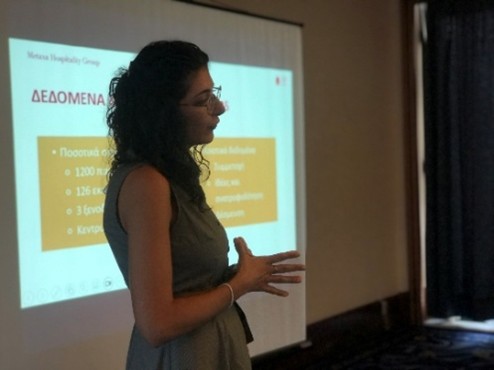
The venue was selected for its sustainability credentials.
We were grateful to Ms. Konstantina Vougioukalou, Sustainability Engagement Supervisor from the Metaxa Hospitality Group, for her presentation about how the resort converts their sustainability policies into practical action.
Specific people with experience in workplace education and in management roles within the tourism and hospitality sectors in Greece were invited. The people who attended the event were influencers and enablers who have a keen interest in improving and scaling access to workplace ‘green skills’ development across the tourism and hospitality sectors.
Awards and certificates were given to GenNZ participants and their achievements were celebrated.

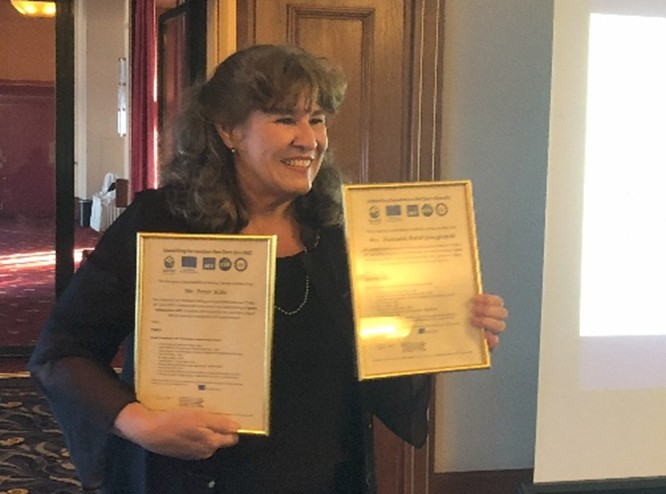
The discussions were lively, informative and provided valuable insight into the next phase of the GenNZ skills development towards a new-zero transition and decarbonised economy. Several attendees from HEI, VET and tourism/ hospitality organisations expressed interest in further co-operation and collaboration to enable scalability and wider access to the GenNZ framework.
Also, the wider impact of this activity has been several expressions of interest, from VET and Adult Educators, from Athens and Crete, for discussing collaboration for taking the GenNZ teaching framework to the next level and to disseminate it through established tourism and hospitality education platforms.
This short film shows some of the highlights of the GenNZ closing event and insightful comments from some of the attendees. The film is recorded in English for wide dissemination.
This film can be watched with Greek and Slovenian subtitles on ESA YouTube using the settings and subtitle functions.
At the Athens Sustainability Forum, Sharon Jackson presented the GenNZ project results to 200 business sustainability practitioners and keen learners. Her presentation encouraged sharing and collaboration for improving sustainability management education in organisations. This resulted in 2 new educator connections and first stage discussions about developing the GenNZ materials to the next stage.
“We would be delighted to arrange an online meeting with you to explore possible areas of collaboration with GenNZ, as we truly believe that the expertise and values that you and the European Sustainability Academy (ESA) bring could greatly enrich the sustainability activities we already implement at our school”.
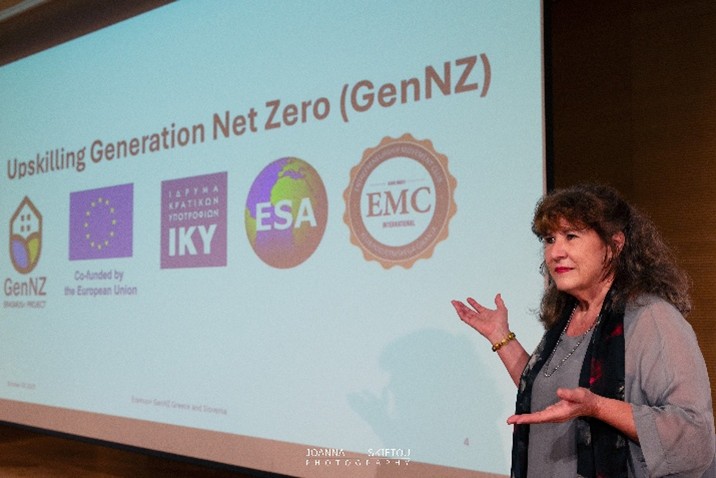
 Sharon Jackson, in Athens Greece, speaking about closing the GenNZ project and future opportunities
In Slovenia, Project Partner Andrej Korpar celebrated the closing of the GenNZ project in Ljubljana. He shared the project results and future opportunities with his associates and colleagues from the Slovenia Chapter of the Travel Massive global network of tourism professionals, who have contributed to meeting the aims and objectives of GenNZ project in Slovenia.


It was a good opportunity to give certificates to the Summer School participants and to celebrate their achievements.
12th RMERC – Belgrade In July 2025, the Project Partners submitted a 200 word abstract, based on the GenNZ project, for consideration of publication by the UN Principles for Responsible Management Education (PRME).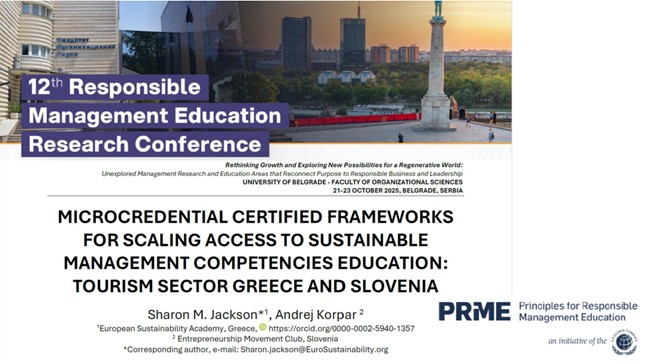 The abstract was peer reviewed and accepted. In September an extended paper was also accepted for presentation at the 12th RMERC conference, hosted at the University of Belgrade, Serbia in October.

This paper will be published in the Conference Proceedings and on ResearchGate – LINKS FOLLOW
TEDxPlaka During September 2025, Sharon Jackson was invited to give a TEDx talk in ancient Plaka, in the centre of Athens, Greece. She spoke about the ‘talk act gap’ in organisations and how a lack of teaching workplace competencies enables it.
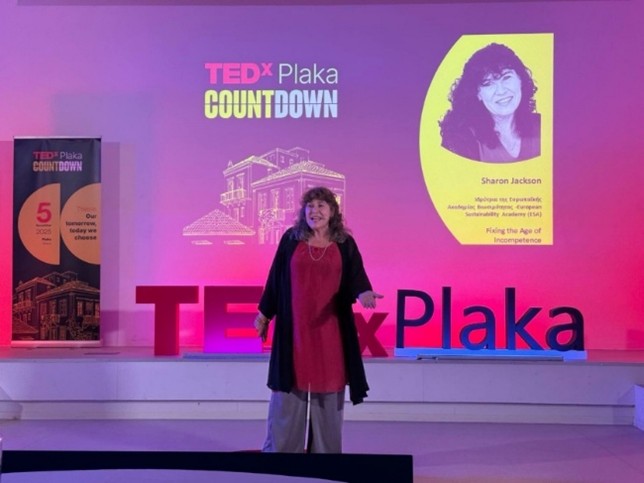
In her talk entitled ‘Fixing the Age of Incompetence’ Sharon discusses the need for better teaching models for addressing climate change and presents the GenNZ main findings. This talk was given on 5th November, after the project close date, and promotes the EU Co- Funded project to a wider audience, globally, via the TED Talks YouTube channel.
Watch the talk here: , in English with subtitles in Greek and Slovenian available via the YouTube settings and subtitle functions.
Quality and Evaluation
ESA Associate and expert in evaluation, Dr. Thanasis Spyriadis conducted a qualitative and quantitative evaluation of the project results, the project management and the project partners co-operation. The full evaluation report can be found on the Erasmus Plus RESULTS platform LINK TO FOLLOW
Final Meeting – GenNZ project closing
After 13 months since the project kick-off meeting in Chania Crete, in September 2024, the 2 GenNZ Project Partners, Sharon Jackson from ESA Crete and Andrej Korpar from EMC Slovenia, met virtually to reflect on the successes of the Gen NZ project and the opportunities for scaling the framework to reach more people for improving their technical competence and confidence in Green Skills at work and to be part of the urgent transition to Net Zero.
Both partners felt fulfilled by the project, its outputs, new learning and especially the richness of new insights from 2 different countries, Greece and Slovenia.
Sharon and Andrej are grateful for all of the support, enthusiasm and contribution from Associates in Greece and Slovenia for ensuring the success of the project in meeting its objectives and aims. And, to the EU Erasmus+ Co-Funding which made this initiative possible.

THANK YOU and SEE YOU AGAIN SOON – From Sharon and Andrej
For full details of the Gen NZ Project results and outputs, visit the Erasmus Plus Results platform 2024-1-EL01-KA210-VET-000257154 Upskilling Generation Net-Zero LINK TO FOLLOW
ESA Award
The European Sustainability Academy (ESA Crete) has been awarded as ‘Sustainability Education Provider of the Year’ 2025.
This award is in part, in recognition, of the work done for the Erasmus+, EU Co-Funded ‘green skills’ teaching programme ‘Upskilling Generation NetZero - GenNZ’ which was designed and piloted during 2025 for the tourism sector in Greece and Slovenia. The tourism and hospitality sectors are known as one of the most environmentally damaging sectors across the globe. However, the sector has the opportunity to educate travellers about waste, reducing single-use plastic, understanding how carbon footprints can be reduced and the role that every person can play in reversing global environmental destruction. You can listen to an interview with ESA Founder Sharon Jackson at the Awards event in London in August 2025.
